Family Benefits in Hungary: CSED, GYED, GYES and Who Qualifies
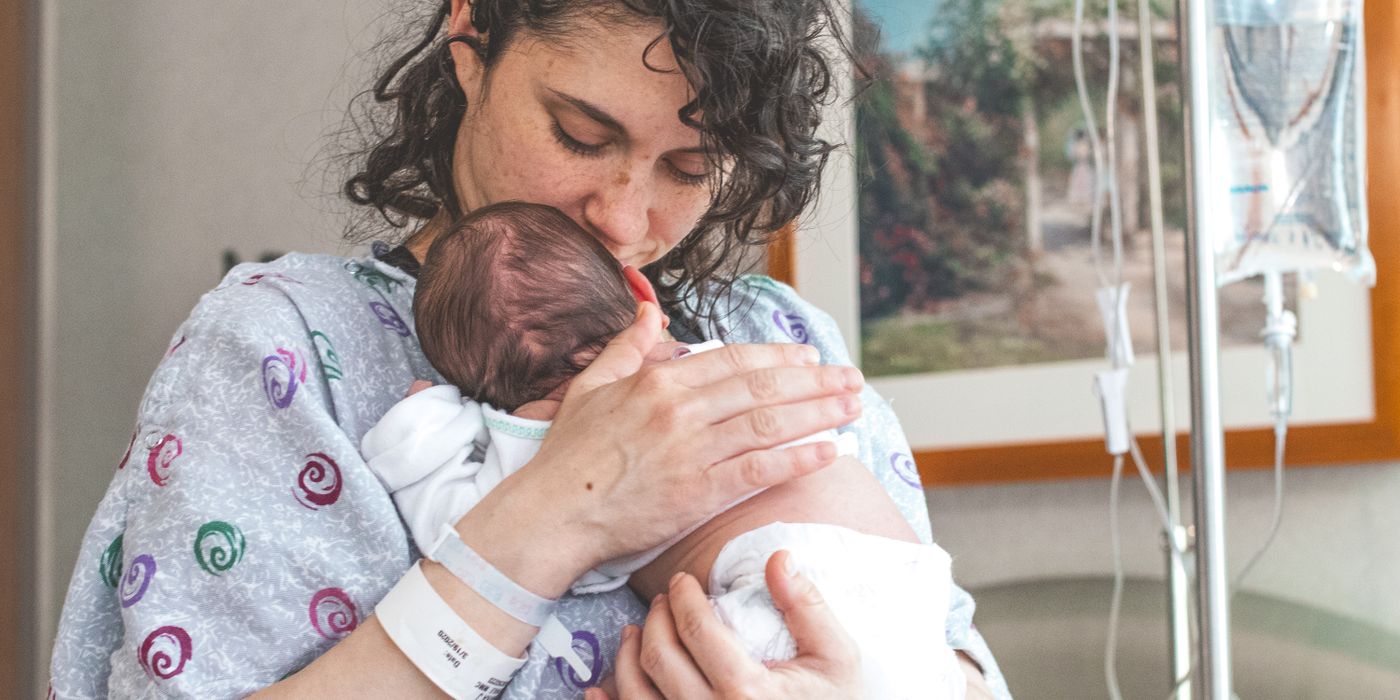
- Hungary pays a ladder of cash benefits after a birth: CSED (infant care fee) first, then GYED (childcare fee) to age two, then GYES to age three.
- CSED and GYED are insurance-based and need 365 days of Hungarian social insurance in the two years before the birth; GYES and the family allowance are universal.
- Eligibility follows Hungarian social insurance, not citizenship, so employed and self-employed foreigners generally build the same rights as locals.
- As of 2026 CSED replaces 100% of earnings and GYED pays 70% (capped at HUF 451,920 a month), both free of personal income tax.
What are CSED, GYED and GYES, and can expats claim them?
Hungary supports new parents with three cash benefits that usually run back to back for roughly the first three years of a child's life. Csecsemogondozasi dij (infant care fee), known as CSED, covers the months right after birth. Gyermekgondozasi dij (childcare fee), known as GYED, follows until the child turns two. Gyermekgondozast segito ellatas (childcare support), known as GYES, then runs until the third birthday. Foreigners can claim all three: entitlement follows Hungarian social insurance rather than nationality.
The key distinction is that two of these benefits are insurance-based (CSED and GYED, which replace part of your salary) and the rest are universal flat amounts (GYES, the child-raising support GYET, and the separate family allowance). Knowing which is which tells you whether your Hungarian work history matters for a given payment. This guide sets out how much each pays as of 2026, the qualifying conditions, and where to file.
These are national benefits, so they work the same in Budapest as anywhere in Hungary. If you are still planning the move with children, start with the wider family relocation guide and come back for the money side here.
Who qualifies for Hungarian family benefits as a foreigner?
The earnings-based benefits are tied to the Hungarian social insurance system (tarsadalombiztositas, or TB), not to a Hungarian passport. If you are legally employed or self-employed in Hungary and paying contributions, you build entitlement the same way a local does. Citizenship is not a condition, provided the employment and insurance criteria are met (European Commission).

CSED and GYED require 365 days of insured status in the two years before the birth. That period does not have to be continuous: separate stretches of insured work are added together (Magyar Allamkincstar). EU and EEA nationals benefit from social security coordination, so insurance periods completed in another member state can be aggregated toward the Hungarian threshold (European Commission).
The universal benefits (GYES, GYET and the family allowance) do not depend on insurance at all. They are generally open to parents lawfully residing in Hungary, including holders of a single work permit valid for more than six months, EU Blue Card holders, people entitled to free movement and stay, and recognised refugees (European Commission). In short, if you work here you unlock the salary-linked payments, and if you simply reside here lawfully with a child you unlock the flat ones.
How much does CSED (infant care fee) pay?
As of 2026 CSED replaces 100% of your average daily gross earnings for up to 168 calendar days (24 weeks), and it can begin up to 28 days before the expected due date. There is no upper cap, so higher pre-birth pay produces a higher benefit, and since 1 July 2025 the payment is fully exempt from personal income tax (Boundless). That full-salary, tax-free design makes CSED the most generous stretch of the whole sequence.

To qualify, the mother needs 365 days of insurance in the two years before the birth, and the child must be born during the insured period or within 42 days of it ending (Magyar Allamkincstar). CSED is normally the mother's benefit, though in defined cases (for example the death of the mother, or a father raising the child alone) another insured carer can receive it.
Because CSED starts around the birth itself, it pairs naturally with your delivery plans and the paperwork that follows. For the practical side of having a baby locally, from public versus private wards to registering the newborn, see the guide to giving birth in Budapest.
How does GYED (childcare fee) work?
GYED picks up where CSED ends and runs until the child turns two (three for twins). It pays 70% of your average daily gross earnings, but with a monthly ceiling: in 2026 the cap is HUF 451,920, calculated as 70% of twice the minimum wage of HUF 322,800 (Forvis Mazars). That works out to roughly EUR 1,160 a month at 2026 exchange rates, so high earners see their replacement rate fall once the cap bites.
Like CSED, GYED has been free of personal income tax since 1 July 2025, although a 10% pension contribution is still deducted (Forvis Mazars). The same 365-day insurance test applies. GYED is not reserved for mothers: an insured father can take it, which lets couples share the leave in the way that suits their careers.
Graduate GYED (diplomas GYED)
Students and recent graduates who do not meet the standard insurance test may still qualify for diplomas GYED (graduate childcare fee) on the basis of active higher education. In 2026 the monthly maximum is HUF 225,960 for a bachelor-level background and HUF 261,240 for a master's or doctoral background, provided the child is born within one year of completing the degree (Forvis Mazars).
What is GYES, and what about GYET?
Gyermekgondozast segito ellatas (GYES) is a flat universal allowance of HUF 28,500 a month, payable until the child turns three (until school age for twins, and up to age ten for a chronically ill or severely disabled child). It does not depend on prior insurance, so a parent who never worked in Hungary can still receive it (Helpers Hungary). At roughly EUR 70 a month it is a supplement rather than an income.
Because the amount is pegged to the minimum old-age pension, GYES is modest next to earnings-based GYED, and many families treat the switch from GYED to GYES around the second birthday as the point where household income drops sharply. Only a 10% pension contribution is deducted, with no personal income tax, and in defined cases a grandparent can claim GYES instead of the parent (Egeszsegvonal).
Families raising three or more minor children have a further option: gyermeknevelesi tamogatas (GYET), the child-raising support paid from when the youngest child turns three until they turn eight (Magyar Allamkincstar). Like GYES it is a flat amount tied to the minimum pension, aimed at keeping a parent at home in a large family.
How is GYES different from the family allowance (csaladi potlek)?
These are separate payments, and confusing them is the most common mistake newcomers make. Csaladi potlek (family allowance) is a universal monthly benefit paid for every child from birth until the end of secondary schooling (at the latest the year the child turns 20), regardless of a parent's work history. GYES, by contrast, is time-limited support for a parent at home with a child under three.
The family allowance is deliberately modest and has not risen since 2008 (Penzcentrum). As of 2026 it is HUF 12,200 a month for one child, HUF 13,300 per child for two children, and HUF 16,000 per child for three or more, with higher rates for single parents and for children with a long-term illness or disability (Helpers Hungary).
Do not confuse this cash family allowance with the family tax allowance, a separate scheme that reduces the income tax you owe and was doubled in 2026. The two stack, so a working parent can receive the allowance and cut their tax bill at the same time. For that side of the ledger, see the guide to Hungary's family tax allowance.
How and where do you claim these benefits?
The route depends on the benefit. CSED and GYED are health-insurance cash benefits: employed parents usually apply through their employer's designated paying agent, and everyone else applies to the National Health Insurance Fund (NEAK). GYES, GYET and the family allowance are handled by the Hungarian State Treasury (Magyar Allamkincstar), which publishes the forms and processes the payments.

Most claims can be started online through the citizen portal (Magyarorszag.hu). Since 16 January 2025 the old simple Ugyfelkapu (client gate) login has been retired in favour of Ugyfelkapu+ with two-factor authentication, or the DAP mobile app, so set that up early to avoid a scramble after the birth (citizen gateway). Keep your address card and residence documents ready, since the office links each claim to your registered status.
One planning point: these benefits are a bridge, not a permanent income, and the amount steps down noticeably once GYED gives way to GYES. Many parents return to work part way through and move a young child into daycare. The guide to childcare costs and daily life covers what that next stage costs so you can budget the whole first few years, not just the leave.
Frequently asked questions
Can a foreigner get CSED or GYED in Hungary?
Yes. CSED and GYED follow Hungarian social insurance, not citizenship. If you have 365 days of insured work in the two years before the birth you generally qualify, and for EU and EEA nationals insurance periods completed in another member state can count toward that total under social security coordination rules.
How much is GYED per month in 2026?
GYED pays 70% of your average daily gross earnings, capped at HUF 451,920 a month in 2026, which is 70% of twice the HUF 322,800 minimum wage. It is exempt from personal income tax but a 10% pension contribution is still deducted, and it runs until the child turns two (three for twins).
How long do CSED, GYED and GYES last?
CSED runs for up to 168 days (24 weeks) from around the birth, GYED then runs until the child turns two, and GYES until the third birthday. Taken in sequence they can cover roughly the first three years, with the payment amount stepping down at each stage.
Is the family allowance the same as the family tax allowance?
No. The family allowance (csaladi potlek) is a monthly cash payment of HUF 12,200 to HUF 16,000 per child that has not changed since 2008. The family tax allowance is a separate reduction of income tax that was doubled in 2026, and a working parent can claim both at once.
Does GYES require you to have worked in Hungary?
No. GYES is a universal flat allowance of HUF 28,500 a month paid to a parent raising a child under three, regardless of any prior insurance. Work history matters for the earnings-based benefits, CSED and GYED, but not for GYES, GYET or the family allowance.
This article is general information for people relocating to Hungary, last reviewed in July 2026. It is not legal, tax or medical advice. Rules change often, so always confirm the current details with the official sources linked above before you act.
← Back to Family & Education